
Altium Designer, previously known as Protel, is one of the most advanced and widely used software tools for Printed Circuit Board (PCB) design. It is trusted by electronics engineers and PCB designers worldwide for creating reliable, high-quality electronic boards. Altium Designer offers a complete, integrated environment that supports the entire PCB design process, from schematic capture to final manufacturing outputs.
What is Altium Designer (Protel)?
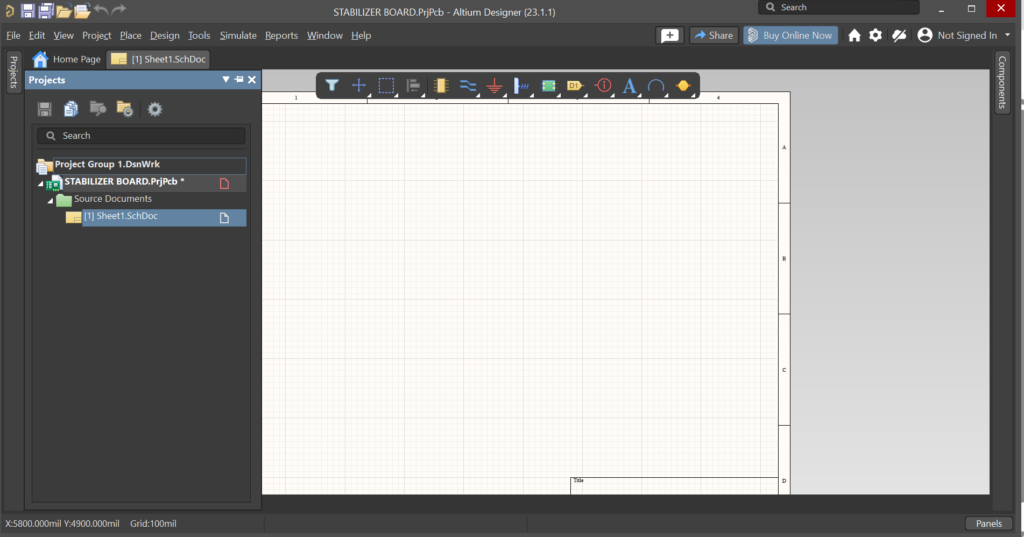
Altium Designer is a professional PCB design software developed to simplify complex electronics design tasks. Protel was the original name of the software, which later evolved into Altium Designer with enhanced features and modern design capabilities. The software allows designers to create schematics, develop PCB layouts, perform simulations, and generate manufacturing files within a single platform.
Key Features of Altium Designer
One of the main strengths of Altium Designer is its unified design flow. Engineers can easily convert schematics into PCB layouts without data loss or compatibility issues. The schematic capture tool helps designers create clear and accurate circuit diagrams with intelligent component connectivity.
Altium Designer provides powerful PCB layout and routing tools that support both manual and interactive routing. Real-time design rule checking helps detect errors early, reducing costly redesigns. The software also includes advanced 3D PCB visualization, enabling designers to view boards in three dimensions and verify component placement and mechanical clearance.
Another important feature is its centralized library management system, which ensures component accuracy and consistency across projects. Designers can also generate essential manufacturing documents such as Gerber files, drill files, Bill of Materials (BOM), and pick-and-place data with ease.
Benefits of Using Altium Designer
Altium Designer improves productivity by reducing design time and minimizing errors. Its user-friendly interface makes it suitable for both beginners and experienced professionals. The software supports single-layer, double-layer, and multi-layer PCB designs, including high-speed digital and analog circuits.
Altium Designer is widely used in industries such as consumer electronics, automotive systems, medical devices, industrial automation, and IoT product development. Its collaboration features allow multiple designers to work efficiently on the same project, making it ideal for team-based environments.
Applications of Altium Designer
Altium Designer is commonly used for designing:
- Prototype and production PCBs
- High-speed and high-density boards
- Analog, digital, and mixed-signal circuits
- Power electronics and RF designs