
Introduction
A battery is an electrochemical energy storage device that converts chemical energy into electrical energy through controlled chemical reactions. Batteries are widely used in electronic circuits, embedded systems, portable devices, electric vehicles, renewable energy systems, industrial automation, medical equipment, and communication devices. They provide a reliable source of DC power where a direct electrical supply is unavailable or impractical.
Modern batteries are designed to deliver stable voltage, long operating life, and high energy density while meeting the requirements of different electronic and electrical applications.
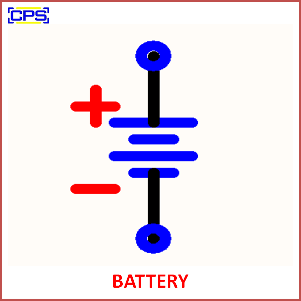
How Does a Battery Work?
A battery consists of one or more electrochemical cells. Each cell contains a positive electrode (cathode), a negative electrode (anode), an electrolyte, and a separator. When an external circuit is connected, a chemical reaction occurs inside the battery that causes electrons to flow from the anode to the cathode through the external circuit, producing electrical power.
Rechargeable batteries reverse this chemical reaction during charging, allowing them to be reused many times.
Main Components of a Battery
A battery is constructed using the following components:
- Positive Electrode (Cathode)
- Negative Electrode (Anode)
- Electrolyte
- Separator
- Battery Terminals
- Protective Outer Casing
- Safety Vent (Rechargeable Batteries)
- Battery Management Circuit (Lithium Batteries)
Technical Specifications
| Parameter | Specification |
|---|---|
| Device Type | Electrochemical Energy Storage Device |
| Output Type | Direct Current (DC) |
| Cell Voltage | 1.2V, 1.5V, 3V, 3.7V, 6V, 9V, 12V and above |
| Battery Capacity | mAh or Ah |
| Rechargeable | Yes / No |
| Charging Voltage | Depends on Battery Chemistry |
| Operating Temperature | -20°C to +60°C (Typical) |
| Cycle Life | 300–5000 Charge Cycles |
| Energy Density | Depends on Battery Type |
| Self-Discharge | Low to Moderate |
| Protection | Overcharge, Over-discharge, Short Circuit |
Types of Batteries
Primary Batteries
Primary batteries are non-rechargeable batteries designed for single-use applications. Examples include alkaline batteries, zinc-carbon batteries, and lithium primary cells.
Secondary Batteries
Secondary batteries are rechargeable and can be charged and discharged repeatedly. Common examples include lithium-ion, lithium-polymer, lead-acid, and nickel-metal hydride batteries.
Lithium-Ion Battery
Lithium-ion batteries provide high energy density, lightweight construction, fast charging, and long service life. They are commonly used in smartphones, laptops, drones, robotics, and electric vehicles.
Lead-Acid Battery
Lead-acid batteries are widely used in automotive systems, UPS units, emergency lighting, and solar energy storage due to their reliability and affordability.
Nickel Metal Hydride (NiMH)
NiMH batteries offer better capacity than NiCd batteries and are commonly used in rechargeable household electronics and portable equipment.
Features
- Compact design
- Portable power source
- High energy storage
- Multiple voltage ratings
- Rechargeable options available
- Long service life
- Reliable performance
- Low maintenance
- Suitable for embedded applications
Advantages
- Provides uninterrupted DC power
- Supports portable electronic devices
- Easy integration into embedded systems
- Available in various capacities
- High reliability
- Wide operating range
- Suitable for renewable energy storage
- Environmentally friendly rechargeable options
Applications
Batteries are used in numerous applications, including:
- Embedded Systems
- Arduino Projects
- Raspberry Pi Projects
- IoT Devices
- Medical Equipment
- Electric Vehicles
- UPS Systems
- Solar Power Systems
- Mobile Phones
- Laptops
- Wireless Sensors
- Robotics
- Industrial Automation
- Security Systems
- Consumer Electronics
Battery Selection Considerations
When selecting a battery, engineers consider:
- Required output voltage
- Current requirement
- Capacity (mAh/Ah)
- Rechargeability
- Operating temperature
- Physical size
- Weight
- Charging method
- Expected service life
- Safety requirements
Battery Maintenance Tips
Proper battery maintenance improves performance and extends service life.
- Avoid deep discharge whenever possible.
- Use the recommended charger.
- Protect batteries from excessive heat.
- Store batteries in a cool and dry environment.
- Inspect battery terminals periodically.
- Do not short-circuit battery terminals.
- Replace damaged batteries immediately.
Future Trends
Battery technology continues to evolve with improvements in energy density, charging speed, safety, and lifespan. Solid-state batteries, sodium-ion batteries, and advanced battery management systems are expected to play an important role in electric vehicles, renewable energy storage, wearable electronics, and smart embedded devices.
Engineering Perspective
Batteries remain one of the most important components in modern electronics and embedded systems. Selecting the correct battery technology directly influences device performance, efficiency, reliability, and operating life. Understanding battery characteristics enables engineers and students to design safer, more efficient, and longer-lasting electronic products across consumer, industrial, and automotive applications.