Introduction
The RTC Ticketing System Using GPRS Communication is an intelligent embedded systems project developed to automate ticket generation and real-time fare management in public transportation. The system uses GPRS (General Packet Radio Service) technology to transmit passenger and ticketing information from the bus to a centralized server. This enables transport authorities to monitor ticket sales, bus locations, revenue collection, and operational efficiency in real time.
Unlike traditional paper-based ticketing systems, this project minimizes manual errors, reduces revenue leakage, and provides accurate digital records. The integration of GPRS communication ensures that ticketing data is securely transmitted over the mobile network, making the system suitable for modern smart transportation solutions.
Project Overview
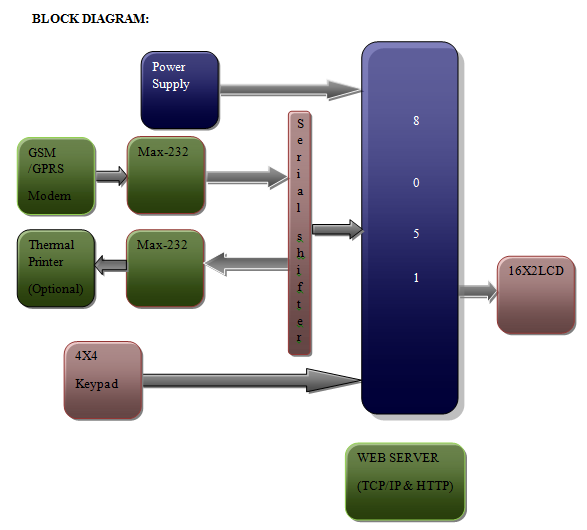
The RTC Ticketing System consists of a microcontroller-based ticketing unit integrated with a GPRS modem, LCD display, keypad, thermal printer, and centralized database. Conductors can issue tickets by selecting the destination or fare using the keypad. The ticket details are displayed on the LCD, printed instantly, and simultaneously transmitted to the central server through the GPRS network.
The server stores the ticket information for revenue tracking, passenger analysis, and fleet management. This real-time communication helps transport authorities monitor bus operations efficiently without relying on manual data collection.
Working Principle
The system begins when the conductor enters passenger information or selects the travel destination through the keypad. The microcontroller calculates the fare based on predefined fare tables stored in memory. After confirming the transaction, the system prints the ticket using a thermal printer.
Simultaneously, the GPRS modem establishes a mobile data connection and sends ticket details such as ticket number, fare amount, bus identification, route number, conductor ID, and timestamp to the central server. The server updates the database instantly, allowing transport officials to monitor ticketing activities in real time.
If network connectivity is temporarily unavailable, the system stores the data locally and automatically uploads it once the GPRS connection is restored.
Key Features
- Real-time ticket generation
- GPRS-based wireless data transmission
- Automatic fare calculation
- Digital ticket records
- Thermal ticket printing
- LCD-based user interface
- Route and passenger management
- Offline data storage with automatic synchronization
- Centralized ticket monitoring
- Secure communication with the server
Hardware Components
- Microcontroller (ATmega328P / PIC / ARM)
- GPRS Module (SIM800/SIM900)
- LCD Display (16×2 or 20×4)
- Matrix Keypad
- Thermal Printer
- EEPROM Memory
- RTC Module
- Power Supply Unit
- GSM Antenna
- Rechargeable Battery
- Voltage Regulator
- Connecting Wires
- PCB
Software Requirements
- Embedded C Programming
- Arduino IDE / MPLAB / Keil
- Serial Communication Protocol
- AT Commands for GPRS
- SQL Database
- Web-Based Monitoring Dashboard
Technical Specifications
| Parameter | Specification |
|---|---|
| Communication | GPRS (2G GSM Network) |
| Controller | ATmega328P / PIC / ARM |
| Operating Voltage | 5V DC |
| Display | 16×2 LCD |
| Ticket Printer | Thermal Printer |
| Memory | EEPROM / Flash |
| Communication Protocol | UART |
| Programming Language | Embedded C |
Advantages
- Eliminates manual ticketing errors
- Faster ticket issuance
- Real-time revenue monitoring
- Reduces paper-based record keeping
- Improves operational efficiency
- Supports centralized database management
- Automatic fare calculation
- Reliable wireless communication
- Secure ticket transaction records
- Easy maintenance and upgrades
Applications
- RTC and State Transport Corporations
- City Bus Services
- Private Bus Operators
- School Transportation
- Corporate Employee Transport
- Tourist Bus Services
- Smart City Transportation Projects
- Fleet Management Systems
- Public Transport Automation
- Digital Ticketing Solutions
System Benefits
The RTC Ticketing System improves the efficiency of public transportation by reducing manual work, preventing ticket fraud, and enabling instant data synchronization with the central server. Passengers receive printed tickets quickly, while transport authorities gain access to live operational reports, helping them make informed decisions regarding routes, schedules, and revenue management.
Future Enhancements
The system can be enhanced by integrating:
- GPS-based live bus tracking
- QR code and barcode ticketing
- NFC and RFID smart card payments
- UPI and digital wallet integration
- Mobile ticket booking applications
- Cloud-based data storage
- Passenger occupancy monitoring
- AI-based route optimization
- Driver and conductor attendance management
- Predictive analytics for transport planning
Challenges and Solutions
Challenges
- Mobile network interruptions
- Hardware failures
- Ticket printer maintenance
- Data synchronization delays
- Battery backup limitations
Solutions
- Offline data buffering
- Automatic data retransmission
- Preventive hardware maintenance
- Backup power supply
- Secure cloud synchronization
Why Choose GPRS for RTC Ticketing?
GPRS communication provides a cost-effective and reliable method for transferring ticketing data over existing GSM networks. It enables continuous connectivity without requiring expensive infrastructure, making it ideal for public transportation systems operating across urban and rural areas. GPRS also supports real-time communication, ensuring accurate revenue collection and efficient fleet monitoring.
Conclusion
The RTC Ticketing System Using GPRS Communication is a modern embedded solution that transforms conventional bus ticketing into an intelligent digital system. By combining embedded controllers, GPRS technology, thermal printing, and centralized database management, the project enhances transparency, operational efficiency, and passenger convenience. It is an excellent project for engineering students, embedded systems developers, and organizations looking to implement smart public transportation and digital ticketing solutions.
BLOCK DIAGRAM