
A transformer is a static electrical device that transfers electrical energy from one circuit to another through electromagnetic induction. It is one of the most important components in electrical and electronic systems because it efficiently increases or decreases AC voltage without changing the frequency. Transformers are widely used in power generation, transmission, distribution, industrial equipment, consumer electronics, and embedded systems.
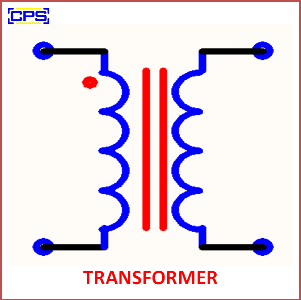
What is a Transformer?
A transformer is an electrical device that converts one level of alternating current (AC) voltage into another. It consists of two or more windings placed around a magnetic core. When AC flows through the primary winding, it creates a changing magnetic field that induces voltage in the secondary winding according to Faraday’s law of electromagnetic induction.
Working Principle
The transformer operates on the principle of electromagnetic induction.
- AC voltage is applied to the primary winding.
- A changing magnetic flux is generated in the magnetic core.
- The magnetic flux links with the secondary winding.
- A voltage is induced in the secondary winding.
- Depending on the turns ratio, the output voltage increases or decreases.
Transformer Formula
Voltage RatioVsVp=NsNp
Where:
- Vp = Primary Voltage
- Vs = Secondary Voltage
- Np = Primary Turns
- Ns = Secondary Turns
Construction of a Transformer
The major parts of a transformer include:
- Magnetic Core
- Primary Winding
- Secondary Winding
- Insulation Material
- Transformer Oil (for power transformers)
- Cooling System
- Tank and Bushings (for large transformers)
Types of Transformers
Step-Up Transformer
- Increases voltage
- Decreases current
- Used in power generation stations
Step-Down Transformer
- Decreases voltage
- Increases current
- Used in adapters, chargers, and power supplies
Isolation Transformer
- Provides electrical isolation
- Improves safety and reduces electrical noise
Auto Transformer
- Uses a single winding
- Compact and economical
Instrument Transformer
- Current Transformer (CT)
- Potential Transformer (PT)
Used for measurement and protection in power systems.
Advantages of Transformers
- High efficiency
- No moving parts
- Long service life
- Reliable operation
- Low maintenance
- Safe voltage conversion
- Electrical isolation
Disadvantages
- Operates only with AC supply
- Large transformers are bulky
- Heat generation requires cooling
- Copper and core losses reduce efficiency
Applications of Transformers
Transformers are used in:
- Power transmission and distribution
- Mobile phone chargers
- UPS systems
- Inverters
- SMPS power supplies
- Audio amplifiers
- Industrial automation
- Medical equipment
- Renewable energy systems
- Embedded electronics projects
Common Transformer Ratings
- 6V Transformer
- 9V Transformer
- 12V Transformer
- 24V Transformer
- 230V/12V Transformer
- 230V/24V Transformer
- 1 kVA Transformer
- 5 kVA Transformer
- 100 kVA Transformer
Transformer Losses
Transformers experience several types of losses:
- Copper Loss
- Core (Iron) Loss
- Hysteresis Loss
- Eddy Current Loss
- Leakage Flux Loss
These losses are minimized through proper core materials, winding design, and cooling techniques.
Maintenance Tips
- Check insulation resistance regularly.
- Monitor transformer temperature.
- Replace deteriorated transformer oil when necessary.
- Inspect terminals and connections.
- Keep cooling systems clean.
- Perform periodic load testing.
Conclusion
Transformers are indispensable components in modern electrical and electronic systems. Their ability to efficiently transfer electrical energy, provide isolation, and regulate voltage makes them essential in everything from household appliances to industrial power networks. Understanding transformer construction, working principles, and applications helps engineers and students design safer and more efficient electrical systems.